Start with the document inventory“We cannot locate an agreement” is not the same as “no rights exist.”
The current board may have inherited provider facilities and practices from a developer, prior board, former manager, earlier property owner, or recorded land instrument. A provider may also point to a franchise, permit, easement, prior contract, or resident service request as its authority. Each source should be identified and evaluated on its own terms.
Resident permission has limits: A resident service order may include permission to enter or install at the home or unit. It may not automatically grant rights over private streets, common areas, landscaping, buildings, conduit, or other property the Association owns or controls.
What if the board cannot find the documents?
CCG can help retrieve agreements and request provider data. Useful sources include the Association's files, recorded land records, plats, governing documents, developer-turnover materials, provider correspondence, permits, construction records, invoices, revenue payments, and equipment locations. Missing information becomes part of the review—not a reason to assume the provider has unlimited authority or no authority at all.
Then examine the Association's propertyWhat is an HOA-wide Right-of-Entry agreement?
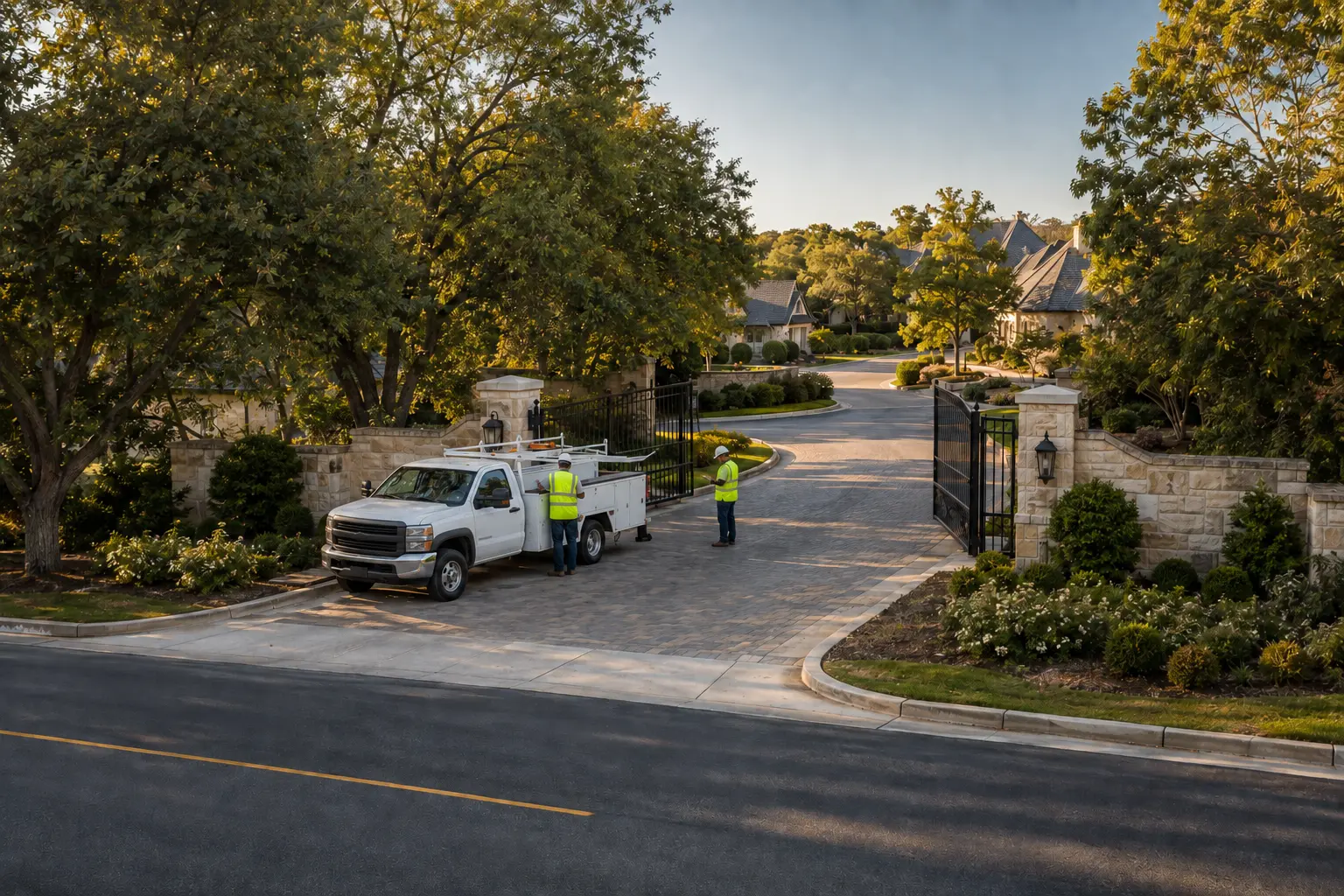
A telecom Right of Entry, or ROE, may give a provider defined rights to enter HOA-owned or HOA-controlled property for surveys, construction, installation, maintenance, repair, upgrades, and related work. Marketing or service provisions may appear in the same document but need separate review. A community-wide ROE creates one framework for the association rather than leaving each construction event or complaint to be handled in isolation.
The key distinction: An individual damaged yard may trigger the inquiry, but the board's review concerns the provider's authority and obligations across the association as a whole.
Public right-of-way versus HOA-controlled property
A city franchise, permit, or utility authority may allow a provider to operate in public streets or other public rights-of-way. It does not necessarily resolve access to privately owned streets, gates, common areas, landscaping, conduit, equipment rooms, power, wiring, or association land.
The community-wide analysis should follow the complete route of the work and compare it with ownership records, plats, governing documents, recorded easements, prior agreements, permits, and applicable law.